
Blog
Our AI Dystopia: Part 1 of 2
AI-generated media is getting more realistic and widespread, fueling disinformation and misinformation. Learn how fake images during Hurricane Helene and the LA wildfires exploited tragedy for propaganda and scams.
- Published
- Feb 17, 2026
- Author
-
 Kenneth Halling
 - Desk
- Blog
“The Party told you to reject the evidence of your eyes and ears. It was their final, most essential command.” - George Orwell, 1984
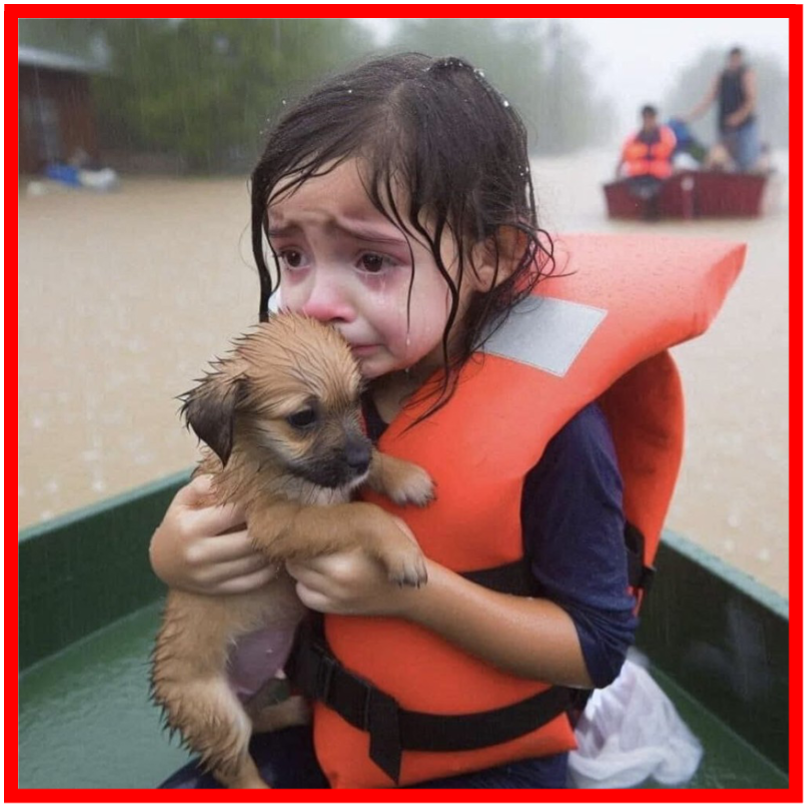
If you were keyed into the United States’ media landscape back in 2024, then you likely remember the grim coverage of Hurricane Helene. This category 4 hurricane devastated the eastern states in September 2024, claiming hundreds of lives and disrupting thousands more. Amongst all the news reports and social media posts covering this catastrophe, you probably came across images like these:
 |
 |
|---|
These images of a terrified little girl clutching her puppy and of a dog trapped on the roof of a submerged home elicited a strong emotional response from many people, including Republican politicians who jumped at the chance to use these images to back up their critiques of the Biden administration’s disaster response.
However, you’ve hopefully already noticed a critical detail about these images: they aren’t real. Instead, both of them were created using artificial intelligence; neither the girl nor the dog depicted in them actually exists.
You may think these images seem harmless. You might even say that, even though they’re not real, they are still “emblematic of the trauma and pain people [lived] through,” as Amy Kremer, a Republican National Committee member in 2024 put it. But these images and AI-generated media like them are far from innocuous. In the few years AI-generated media has been around, its rapid improvements in capability and general availability have enabled its use in fueling disinformation and misinformation.
AI-Generated Media is Getting More Realistic and Widespread
I’ve met many people who are confident in their ability to discern when something is AI-generated or not. The problem with having such confidence is that AI-generated media is always getting better at convincingly imitating legitimate media. Just take a look at the video below that compares two AI-generated videos depicting the same thing (Will Smith eating spaghetti), but with one being made in 2023 and the other being made only two years later:
Will Smith Eating Spaghetti - AI-Generated Videos
However, not being able to tell if one piece of media is real or not is hardly a concern. After all, tools like Photoshop allowed people to doctor media and tweak reality long before AI entered the picture. But even with proper time, resources, and skills, one couldn’t just hop on Photoshop and create a half dozen realistic-looking images in less than a minute.
This leads us to the real problem with AI-generated media getting better:
- The resources to create such media are available to anyone with a computer, and
- The skill needed to create them boils down to your ability to type a prompt into a chatbot.
Already the internet is flooded with AI-generated media because just about everyone can create it and create it fast. We’ve already arrived at the point that for every video, image, or soundbyte that catches our attention, we have to determine if it’s real or not.
AI-Generated Media Fuels Disinformation
Eventually, AI will fool you. In fact, it likely already has. Granted, it’s not an issue if you were moved by seeing a seemingly genuine photo of a frightened girl clutching a puppy. After all, we’re human. Even if that specific girl wasn’t real, there were thousands of others actually impacted by Helene, and even a fake picture like that could have sparked some act of goodwill.
But at least one other AI-image generated during hurricane Helene demonstrates how AI-generated media can sow significantly more impactful disinformation:

The AI-generated image depicted above depicts Donald Trump, the Republican presidential candidate in 2024, wading through streets flooded by Helene with a rescue worker, despite Trump never taking on such a direct role in the rescue efforts. Nonetheless, this image went viral on Facebook, being shared over 160,000 times by people who presumably believed the image was real.
The image effectively served as propaganda supporting Trump for the 2024 presidential election. This depiction of Trump taking an active role in hurricane rescue efforts served as a sharp contrast to the aforementioned criticisms of the Biden administration’s hurricane response, such as false accusations that Biden was refusing aid to Republican areas. This image was meant to paint Trump as the more desirable candidate for US president for voters.
Hurricane Helene isn’t the only tragedy to have been exploited by people using AI-supported disinformation though. In January 2025, during the LA wildfire, convincing AI-generated videos and images circulated on social media depicting burning locations, such as the Hollywood sign, that were far from the actual source of fire. The motivations behind these videos ranged from poor attempts at humor to scams seeking donations.
Regardless of motivation, the disinformation spread by these images and videos exacerbated the fear surrounding the LA wildfires, caused confusion among evacuees, and distracted first responders, making the entire tragedy harder to deal with overall.
People Don’t Understand AI’s Limitations
Another critical problem with everyone having access to artificial intelligence is that most people haven’t been educated on the limits of what the technology can do, creating an environment where misinformation thrives. Following the recent fatal shooting of Renee Good by a masked Immigrations and Customs Enforcement (ICE) officer, someone attempted to use xAI’s generative chatbot, Grok, to generate a picture of the officer without his mask. The resulting image began circulating on social media and was eventually connected to the name “Steve Grove” through unclear means.
If you didn’t already know, AI isn’t capable of unmasking people in images. Instead, AI will hallucinate facial details that don’t actually resemble any real person. In this case, at least two people named “Steve Grove” were harassed online before news outlets finally identified the masked shooter.
AI getting something wrong isn’t an issue limited to this niche story of misuse either. Since AI is created with, trained with, and tested with human-gathered data, plenty of the biases and errors reflected in that data inadvertently express themselves in AI-generated media. For example, a major study reported on by Stanford University found that LLMs carried a bias against older women in the workforce because images and videos across the internet (which these LLMs are trained on) disproportionately portray women in the workforce as younger than men. In reality, however, there are “no systematic age differences between women and men in the workforce according to the US Census” (Guilbeault et al., 2024).
Too many people seem to think AI is omniscient, when the media it generates for us is actually riddled with misinformation and bias. AI is capable of making all the same mistakes humans do, and it can make them much faster.
Conclusion
Looking at AI-generated media, I’m reminded of a quote from George Orwell’s dystopian novel “1984”, where citizens under an authoritarian government are told to “reject the evidence of [their] eyes and ears.” It’s a chilling line meant to warn that those who abuse their power will try to manipulate people’s very perception of reality, telling them that something is only true if the powerful say it is true, even if the people have evidence to the contrary.
This is the core of all problems AI-generated media presents: the more of it there is, the less we can trust the evidence of our eyes and ears. Before long, we’ll end up rejecting something as fake when it was real all along. The most sinister part of the lies it can propagate isn’t the falsehoods it makes us believe, but the truths we end up rejecting.
But these problems are solvable. I focused solely on AI-generated media’s problems in this blog, but next week I’ll discuss what solutions are available and ones we can work towards. AI isn’t going to go away. It will continue to become more prevalent in our daily lives as the technology progresses, so we need to learn how to live with it.
In the meantime, don’t reject the evidence of your eyes and ears, but do take it with a grain of salt.
Sources
- NPR - AI Images Hurricanes Disasters Propaganda
- PetaPixel - AI Images Are Causing Havoc for People Affected by Hurricane Helene
- NPR - LA Wildfires Fake Images
- Reuters - AI-Generated Video Purports to Show Apocalyptic Scenes from Los Angeles Wildfires
- Yahoo News - Image of Donald Trump Wading Through Flood
- US News - FEMA’s Political Storm
- NPR - ICE Minneapolis Grok AI
- Chapman University - Bias in AI
- UNESCO - AI Recommendation Ethics Cases
- Nature - Guilbeault et al., 2024
Continue
Keep reading.
Psychology-Aware Security Design
Cybersecurity products need affordances that guide people toward the right actions under stress. Psychology-aware design is how defenders catch up with attackers who already use it.
AI: The New Face of Cybersecurity
OpenAI and Anthropic AI agents are escaping sandboxes and exploiting vulnerabilities at machine speed. Learn what the Hugging Face breach reveals about AI's growing role in offensive and defensive cybersecurity.
The Limitations of Hashing for Data Anonymization
Why using hashing alone is an incomplete anonymization process